
This post may contain affiliate links. Please read our disclosure policy.
Halal
The Ibumie Mi Goreng Perisa Kari Kapitan is a Malaysian dry noodle. It’s Mi Goreng style, no broth. Kari Kapitan translates to Captain’s Curry and it’s a dish from Penang. The moment I opened the package the fried shallots and lemongrass smell hit me immediately. James and I both stopped to take a second sniff.
Produced in Malaysia by Spices & Seasonings Specialities Sdn. Bhd.
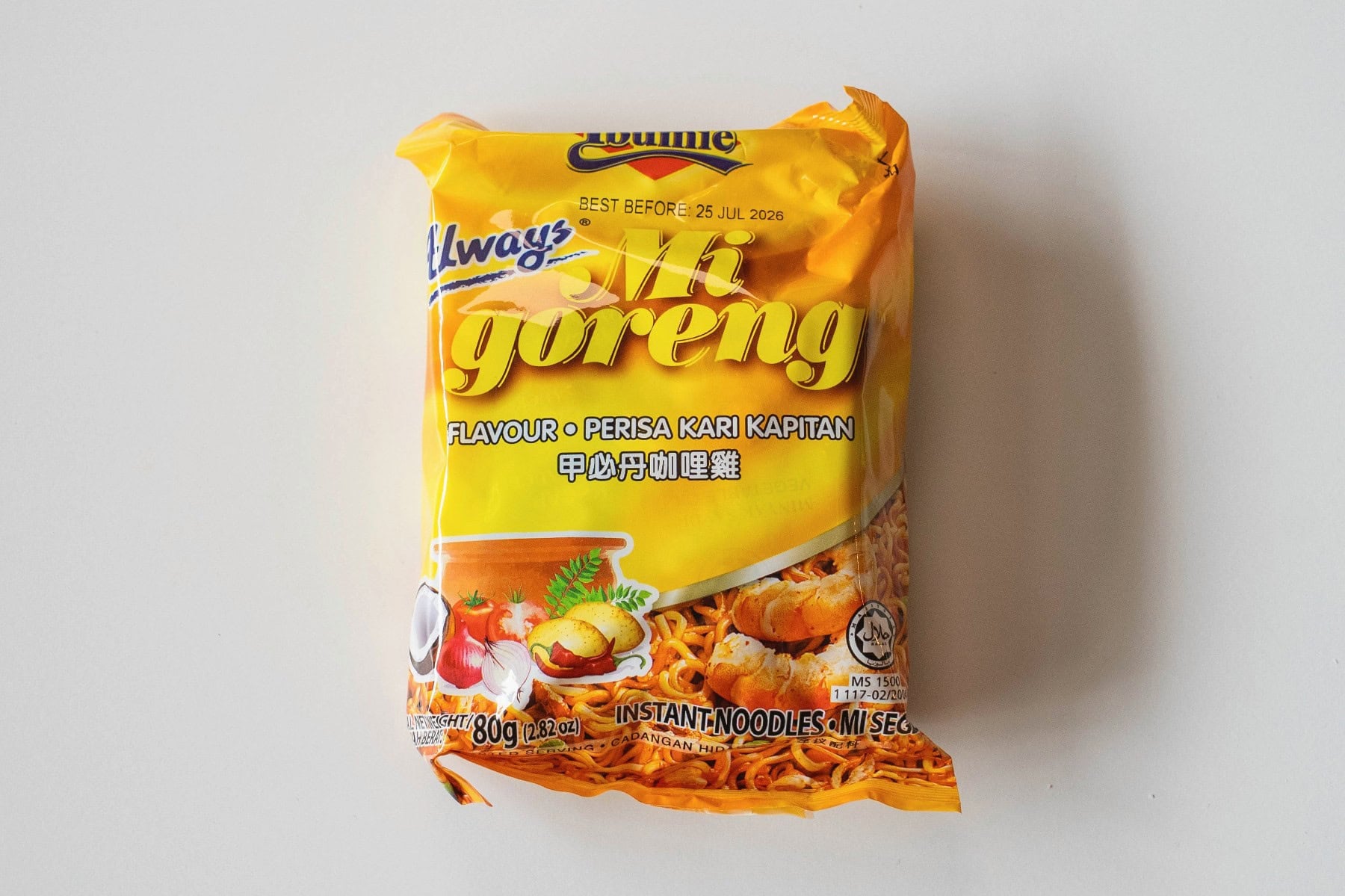
Table of Contents
What’s in the Package
Inside the wrapper you get a block of fried wheat noodles and four packets: a double packet with seasoning powder on one side and chili powder on the other, vegetable oil, thick sweet soy sauce, and a little clear packet of fried shallots.

How to Cook Ibumie Mi Goreng Perisa Kari Kapitan
- Boil noodles in 400ml of water and simmer for 3 minutes.
- While noodles are being cooked, put seasoning powder, chilli powder, seasoning oil and sweet soy sauce on a plate.
- Drain well.
- Mix well with the seasonings and serve.
- Sprinkle the fried shallots on top.
How Does It Taste
The first thing you notice is the oiliness from the shallot oil packet. It’s generous and it carries the spice blend really well. The flavor is complex with the fennel, cardamom, clove, and coriander all in there. It’s spicy, sweet, and salty all at once and the balance between those three is what makes this bowl interesting.
James and I kept going back for more bites just to figure out what we were tasting. That’s usually a good sign.
The noodles are standard wheat at a 2 out of 5 on thickness with a reliable springy chew that holds up well against the heavy seasoning. Spice is a 2 out of 5. It’s present and building but not aggressive.

How Does It Compare
The most natural comparison is the Indomie Mi Goreng. It’s got the same dry noodle format, same shallot oil character, same Southeast Asian flavor foundation. The Indomie leads with sweet soy. The Ibumie Kari Kapitan leads with curry spice and lemongrass.
Both are worth having in the pantry but they’re doing completely different things. If you love the Mi Goreng format and want something more complex and spice-forward this is the one to try next.

How to Level Up Ibumie Mi Goreng Perisa Kari Kapitan
I would suggest topping it with a fried egg. Kaffir lime leaves add a citrusy brightness that lifts the heavy spice blend and feels authentic to the Penang direction. Grilled chicken thigh would also be a good addition.
Final Verdict
The Ibumie Mi Goreng Perisa Kari Kapitan is one of the more interesting dry noodles I’ve tried. The Captain’s Curry spice blend is complex and layered in a way that makes you pay attention to what you’re eating. James and I both appreciated it.
Tasting Notes
How do I rate my ramen? Check out the Ramen Rating Guide.
Related Instant Ramen
- Indomie Mi Goreng Instant Stir Fry Noodles
- Indomie Mi Goreng BBQ Chicken
- KampongKu Penang Prawn Noodles
- Maggi Perisa Tom Yam Instant Noodles
- MAMA Green Curry Instant Noodles
Where to buy Ibumie Mi Goreng Perisa Kari Kapitan
Community Ratings
These noodles are based on the Malaysian Penang Nyonya Curry, bteer known as “Kari Kapitan”. It’s very savoury as you can really taste the curry flavour come through pretty strong, and this makes it a lot spicier than the regular Ibumie Fried Noodles. This isn’t a brothy noodle btw, it’s a dry stir-fried type noodles similar to Indomie. If you really like curry, I’d recomment it but personally it’s not my taste I would rather have the regular Ibumie or Indomie.