This post may contain affiliate links. Please read our disclosure policy.
I first came across Fly By Jing through their chili crisp, and I got a few of their PR packages a few years back. This particular bag came from my friend Beryl, who sent it my way. I wanted to see whether the Classic Soy Noodles held up on their own, without dressing them up.
Produced in Sichuan, China.
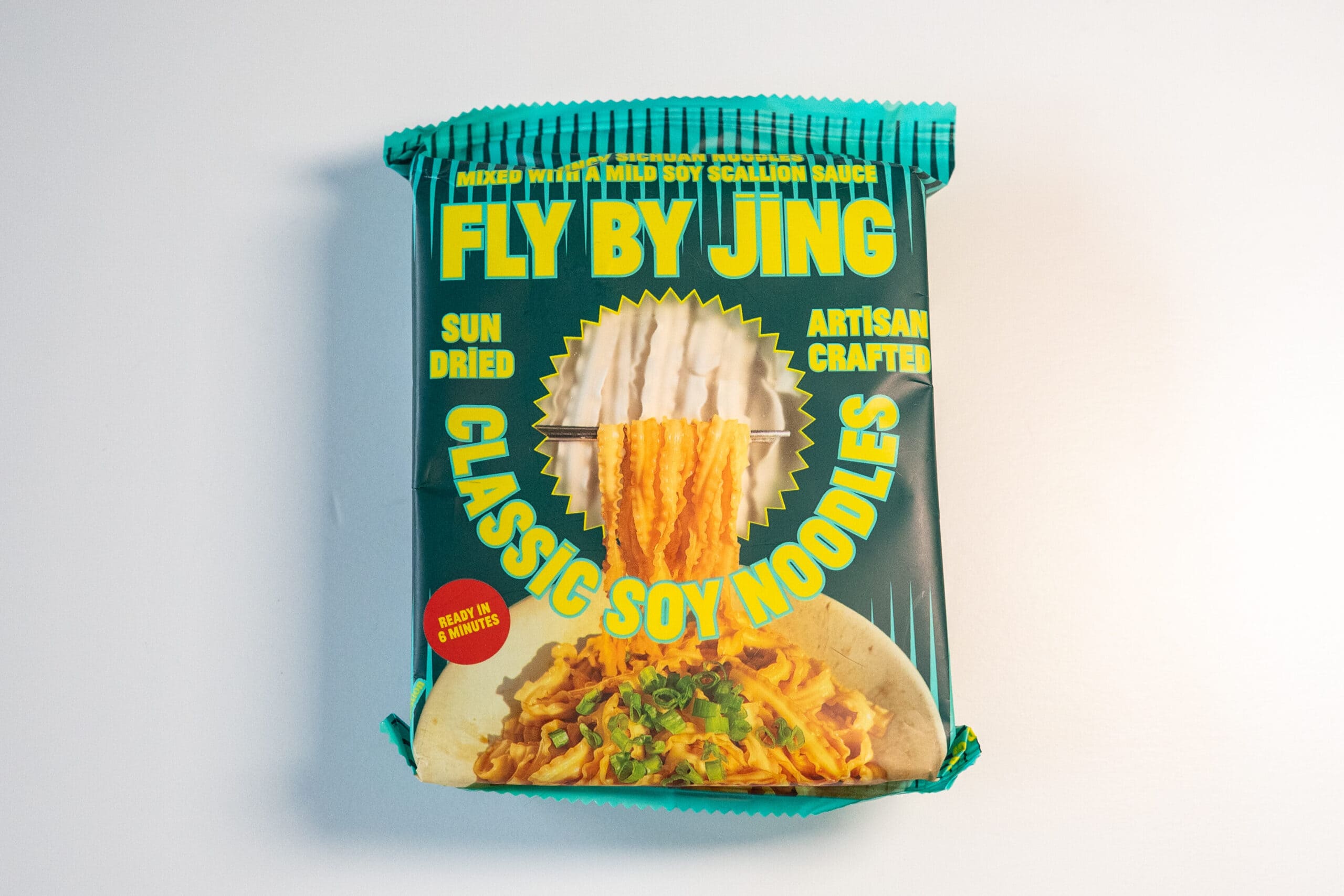
What’s in the Package
Inside the teal packaging, you’ll find a bundle of sun-dried, flat, wavy wheat noodles and a single Soy Scallion Sauce packet. It’s non-GMO, vegan, and 12 grams of protein per serving.
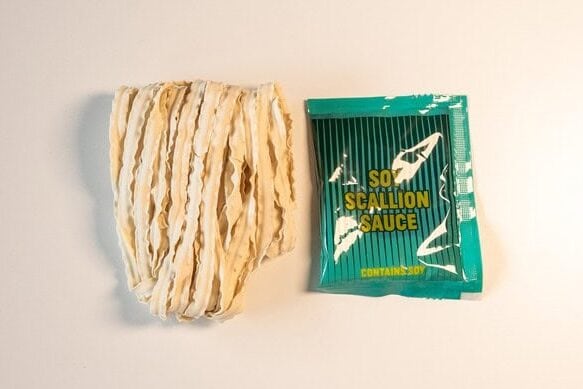
How to Cook Fly By Jing Classic Soy Noodles
- Bring six cups of water to a boil in a large pot. Six cups is a lot of water for one serving of noodles, so make sure your pot is big enough before you start.
- Cook the noodles for six minutes, then drain.
- Add the Soy Scallion Sauce packet, mix until every strand is coated, and eat.
How Does It Taste
The first thing I smelled when I opened the sauce packet was soy sauce. James said scallion oil was the first thing that hit him. Both sit right at the top, which makes sense for a product called Classic Soy.
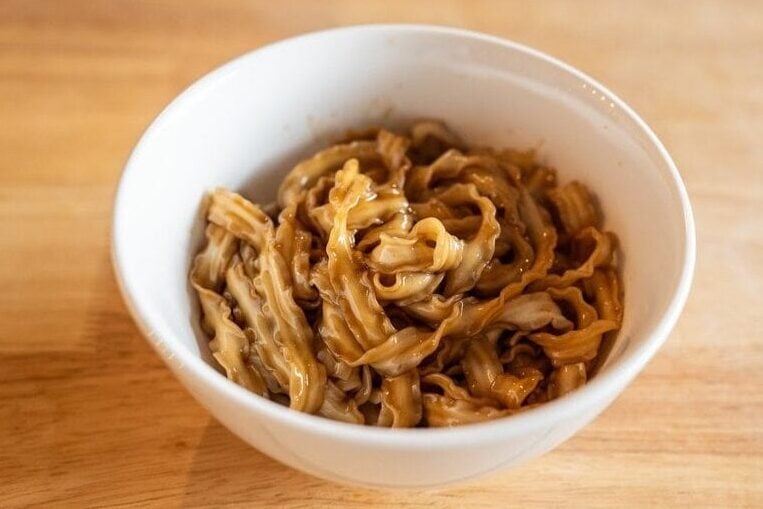
The sauce coats the noodles in a glossy, oily layer that gives every bite that scallion oil slick. It’s pleasant, savory, and mild. It tastes like a sauce built to not offend anyone. James and I both thought it could use more garlic. It would have been nice if there was a small side packet of their chili oil to give you the option of heat.
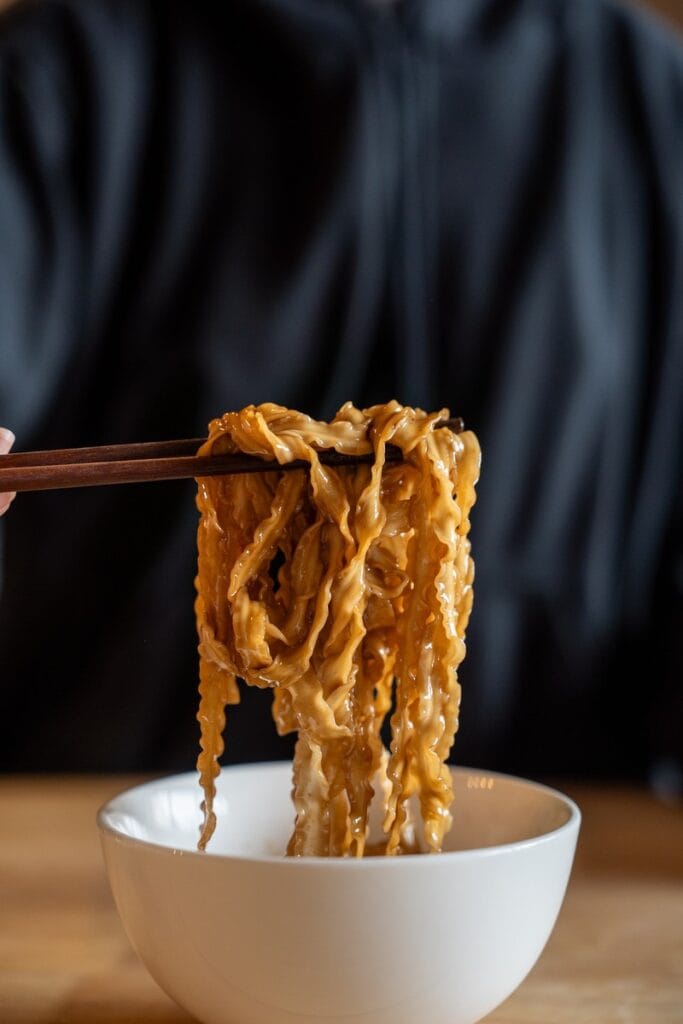
The noodles themselves are the highlight. They’re sun-dried and flat, the kind that rehydrate into something closer to a fresh hand-pulled noodle than a standard fried ramen cake. They have real bite, real chew, and they hold onto the sauce well. The six-minute cook time is accurate. Any less and they’re too firm.
How Does It Compare
These are a dry, sauced noodle, which puts them closer to a jjajang or dan dan format than a tonkotsu or shoyu bowl. The closest comparisons on the site are the You Ni Yi Mian Scallion Oil Noodles and the PaMi Zeng Noodles Scallion Sichuan Pepper.
The PaMi Zeng uses the same sun-dried wide wheat noodle and a scallion-forward sauce, but adds a Sichuan pepper oil sachet that gives you the numbing heat this one leaves out. If you want numbing heat with your scallion oil, reach for PaMi Zeng.
How to Level Up Fly By Jing Classic Soy Noodles
This is a great base to build on. A clove or two of fresh minced garlic stirred in while the noodles are still hot makes a noticeable difference. Fried garlic works too if you want the texture instead of the bite.
Fresh scallions on top, even though the sauce already has scallion oil, add a grassy freshness that keeps it from feeling one-note. A drizzle of chili oil is the easiest fix for the heat that the pack is missing.
My favorite addition is a soft-boiled egg, or even just a raw yolk cracked right on top. Break the yolk into the noodles and it turns the sauce into something richer and creamier.
Final Verdict
The Classic Soy Noodles are a quality base with excellent noodles and a sauce that plays it safe. It’s not the punchiest bowl on the shelf, but it’s easy to build into something that hits harder. I’d buy this one again, even though this pack was sent to me rather than bought. Thank you, Beryl!
Tasting Notes
- Spice Level: 0/5
- Broth Viscosity: N/A
- Noodle Thickness: 3.5/5
- Noodle Type: Sun-Dried Flat Wheat
- Topping Suggestions: Fresh or Fried Garlic, Scallions, Chili Oil, Soft-Boiled Egg
How do I rate my ramen? Check out the Ramen Rating Guide.
Related Instant Ramen
- You Ni Yi Mian Scallion Oil Noodles
- PaMi Zeng Noodles Scallion Sichuan Pepper
- Nongshim Chapagetti Jjajang Noodles
- Trader Joe’s Soy & Sesame Ramen
- Ajinomoto Oyakata Yakisoba Classic Soya Sauce
Where to Buy Fly By Jing Classic Soy Noodles
Community Ratings
There are no reviews yet. Be the first one to write one.