
This post may contain affiliate links. Please read our disclosure policy.
Wondering when to add an egg to your ramen? Adding an egg to instant ramen is one of my favorite upgrades, but everyone has a different preference for how they like that yolk cooked. Whether you want it hard-set or liquid gold, all it takes is timing.
I’m breaking down three different timings using Shin Ramyun (which has a 4.5-minute cook time) so you can get the perfect egg every single time. If you want more inspiration for your bowl, check out my favorite instant ramen toppings.

Pro-Tips on cooking the eggs
Before we talk timing, here is my biggest tip: Break your egg into a separate ramekin or small bowl first. If you care about keeping the yolk intact, sliding it from a bowl into the broth is much safer than cracking it directly over the boiling pot. When you crack an egg directly over boiling water, the height of the fall can also cause the yolk to break.
Using a bowl also gives you a safety net. If you accidentally get shell fragments in the egg, it’s much easier to fish them out of a small bowl than to hunt for them in a steaming pot of boiling soup.
My second tip is when you start breaking up the noodles while they’re cooking, be extra careful not to poke the yolk! I use chopsticks to carefully break up the noodles and then move them to the side to make room for the egg drop.
1. The Fully Cooked Yolk
Timing: 5.5 Minutes Total
If you like your yolk cooked all the way through but still tender, you need to give the egg a head start. By getting the egg in early, you’re allowing the outer whites to fully set and the yolk to begin the coagulation process before the noodles even enter the equation.
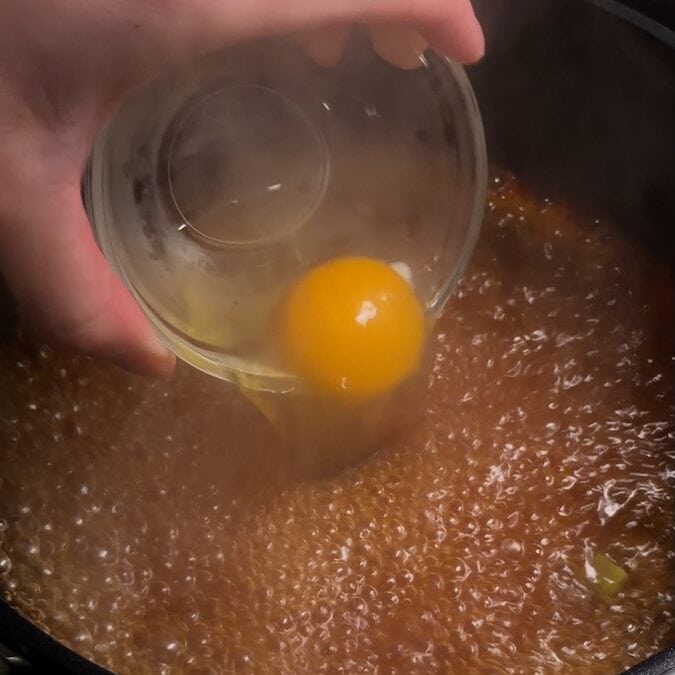
How to do it: Add the egg to the boiling broth 1 minute before you add the noodles. When introducing the noodle brick, gently slide it into the opposite side of the pot. You want want to avoid any direct contact between the heavy noodles and fragile egg while the whites are still setting.
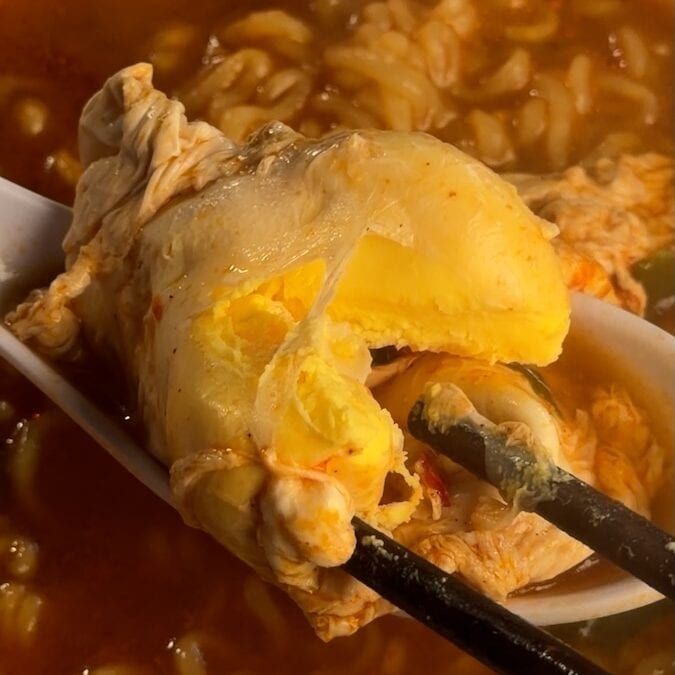
Since Shin Ramyun noodles take 4.5 minutes, the egg gets a total of 5.5 minutes in the water. This cooks the yolk through perfectly without making it rubbery or overcooked. It’s the sweet spot for a hard-poached egg.
2. The Jammy and runny center
Timing: 4.5 Minutes Total
This is my personal favorite! The outside of the yolk is jammy, and the center stays beautifully runny. This one is also the easiest for me to remember the timing.
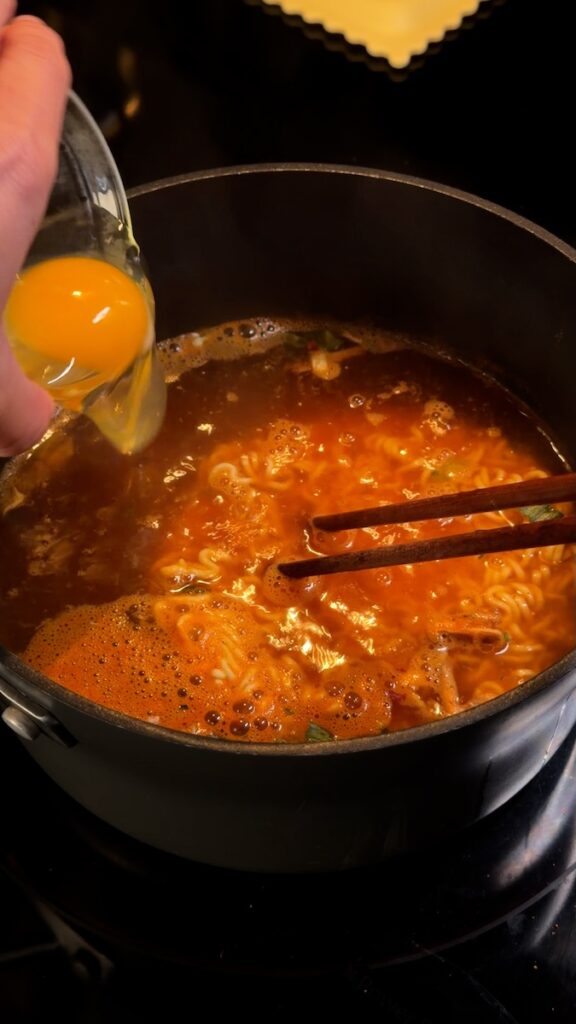
How to do it: Add the egg right after you add the noodles. Just move the noodle brick to the side to make a little “nest” for the egg.
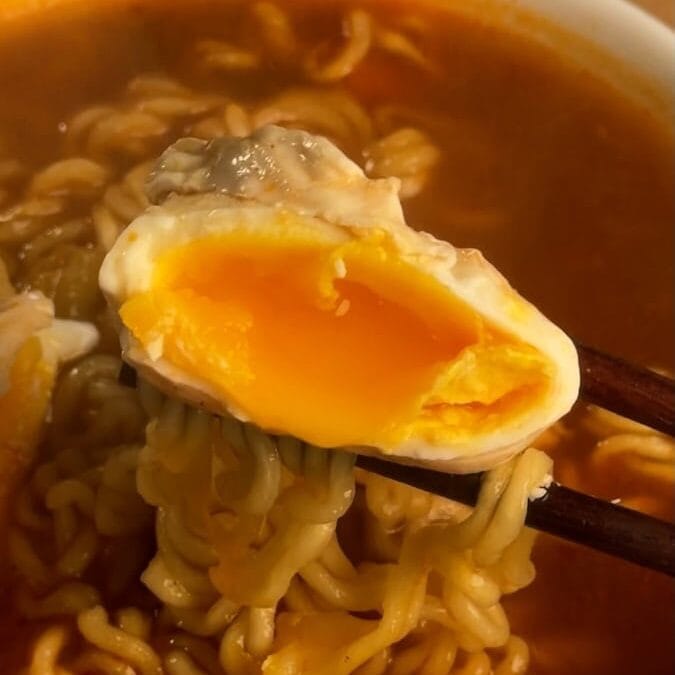
After 4.5 minutes of simmering, you get the perfect hybrid texture. The egg whites are completely cooked, the outer yolk is has begun to solidify into a custard-like “jammy” ring, and the center is still liquid enough to mix into the broth for a rich, velvety finish.
3. The Completely Runny Yolk
Timing: 2 Minutes Total
What you get with this method is a set white and a yolk that is 100% runny. This is great for those of you who like mixing the yolk into the broth.
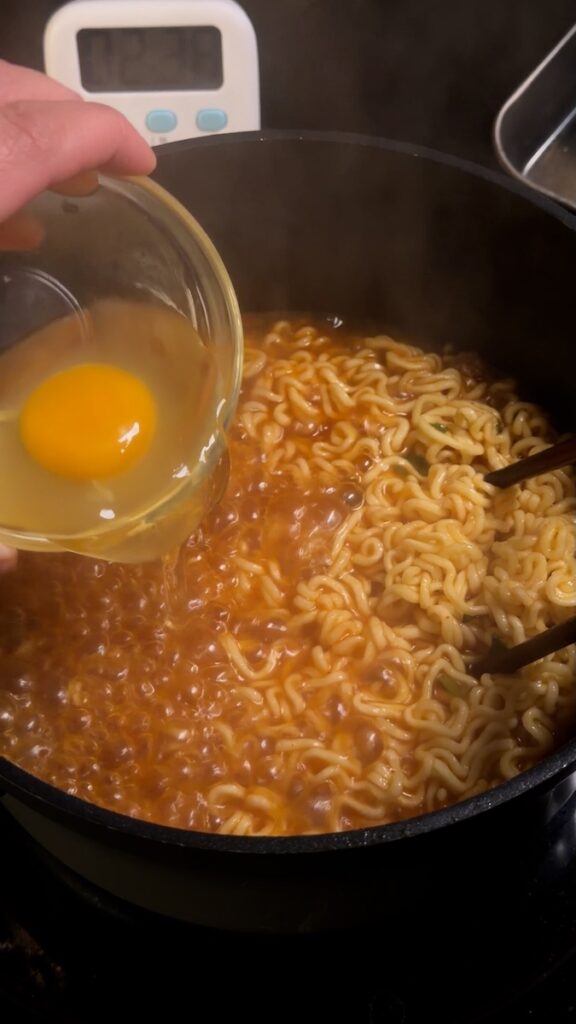
How to do it: Let the noodles cook for 2.5 minutes first. This is usually when the noodle brick is soft enough to break apart. Note that this method is for poaching the egg directly in the broth; if you prefer a pre-prepared option, you can see my guide on how to make soft boiled eggs for ramen ahead of time.
Drop the egg in for the final 2 minutes of cooking. Again, just move your noodles to the side so the egg can be fully submerged in the broth.
This is the method you have to be most careful with since it’s more fragile. When you go to pour this into your bowl, do it slowly so that the egg gently plops into the bowl. If you pour too quickly or from too high a distance, the weight of the noodles and the force of the falling broth can easily burst the yolk.
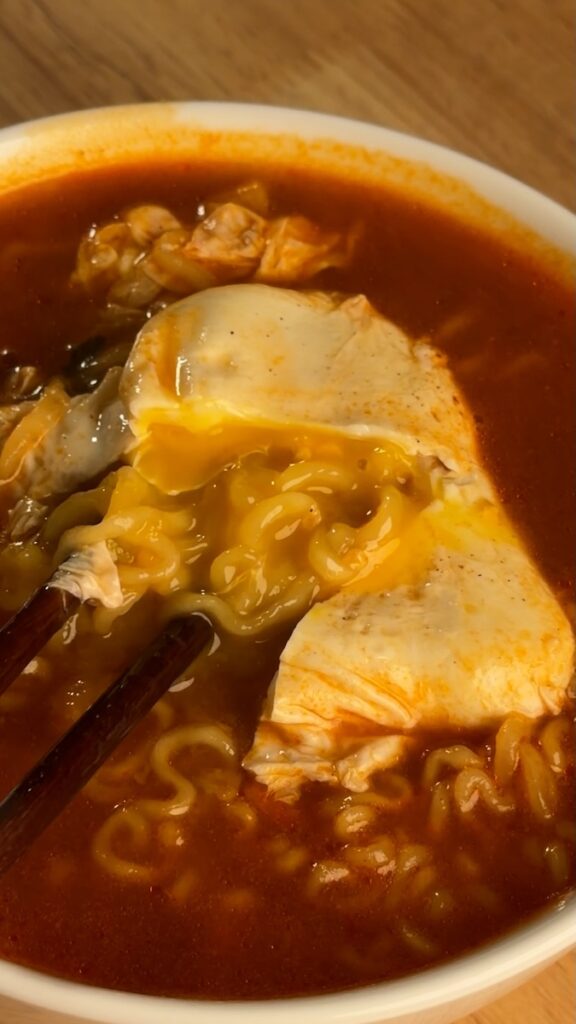
Keep in mind that there will be carryover cooking so don’t let the bowl of ramen sit too long or the egg yolk will start solidifying! I immediately break the egg so I can stir the yolk into the broth.
When to add an egg to Your ramen video
FAQ
Is it safe to eat a runny egg in my ramen?
For most people, yes. The residual heat of boiling ramen broth (which stays near 212°F) is hot enough to cook the exterior of the egg and pasteurize the whites. If you prefer a firmer yolk for safety or taste, simply place a lid on the pot for the last minute of cooking; the trapped steam will cook the yolk through without overcooking your noodles.
Note: Consuming raw or undercooked eggs may increase your risk of foodborne illness, especially if you have certain medical conditions.
Should I add the seasoning packet before or after the egg?
I suggest adding the seasoning before the egg. This gives the powders and/or oils plenty of time to fully dissolve and disperse evenly throughout the water. If you want until after the egg is dropped, the seasoning can clump on top of the egg.
Can I use more than one egg?
You definitely can, but just make sure your pot is wide enough so the eggs don’t fuse together into one huge egg (unless that’s what you want). Dropping two eggs in will also drop the temperature of the broth instantly, so account for a little bit of extra cooking time.
Which one is your favorite?
Are you Team Jammy or Team Runny? Let me know in the comments how you take your ramen eggs!
For more ways to cook eggs for ramen, check out my eggs page!






I do the third method with Buldak with some modifications. I always cook it with a 5 min timer boiling at max heat for the first two minutes, then I turn down the heat halfway and wait to add the eggs when there’s about 2:05 left. I always cook two bricks of Buldak with 4 eggs. It usually takes about 20-25 seconds for me to crack the eggs finishing adding the last one at about 1:40 left on the timer. I also try to only use the minimum amount of water required in a 1 quart pot (I just count 15 seconds of water coming out of the faucet for the two bricks) so there’s not a ton of residual heat cooking the eggs (also helps them not to sink and stick to the bottom) and then try to cover them a little with the noodles so they don’t slip out when I’m straining out the water. That’ll get the eggs just enough heat to finish cooking after you break the yolks and mix it with the noodles. Like that, the egg makes the Buldak really rich and saucy, which I love. Also tames the heat a little making the 2x spicy more bearable lol
Wow, you’ve really dialed in the process! Thanks for sharing, David!
Team Jammy 🙂 LISA! Ty you for such great content and what you’ve done with this web site is amazing!! You are so talented thank you for continuing to inspire me in cooking ☺️🩵🩵🩵🐻🌼🫶🏼🫶🏼🫶🏼🫶🏼🫶🏼🫶🏼🫶🏼🫶🏼🫶🏼🫶🏼🫶🏼🫶🏼🫶🏼🫶🏼