
This post may contain affiliate links. Please read our disclosure policy.
The brown egg with the dark band around the white. The one you see in every ramen shop bowl. The one that looks like it took a chef to make. That’s an ajitama, and once you know how to make it, you’ll never want a plain soft-boiled egg in your ramen again.
I learned to make ajitama in ramen school, but the version I make at home now is the equilibrium method I picked up from Mike Satinover‘s Ramen Lord ebook. It guarantees consistent flavor without over-salting, and it’s the most foolproof way to make ramen eggs in your own kitchen. The trick is in the math. Once you weigh everything, you can’t really mess it up.

Why Soy-Marinated Eggs Are Great for Instant Ramen
A regular soft-boiled egg gives you a yolk and a white. An ajitama gives you a yolk, a white, and a savory-sweet crust of soy and mirin around the outside. The flavor goes deeper than a sprinkle of salt or a splash of soy on top. The egg has been sitting in the brine for at least a day, so the seasoning is part of the egg now, not on top of it.
The other reason it earns the spot: soy-marinated eggs keeps for up to a week in the fridge in its brine. You can make a batch on Sunday and have ramen-ready eggs all week.
The Two Steps That Make an Ajitama
This is two recipes stacked on top of each other. First you cook a soft-boiled egg. Then you marinate it. Both steps matter, and the egg part is the harder of the two. If you skip the ice bath or peel poorly, the brine soaks into a torn white and you get a sad-looking egg.
Step 1: The Soft-Boiled Egg
Follow my soft-boiled egg guide for the cook time. I use 6 minutes and 30 seconds for ajitama. Peel under water in the ice bath. The shells need to come off cleanly because the brine is going to highlight every nick.
Step 2: The Equilibrium Brine
This is the part that’s different from most ajitama recipes. Instead of using a fixed soy-mirin-water ratio, you weigh everything and brine to a percentage. The result is the same flavor every time regardless of how many eggs you make.
- Weigh the eggs and the water. Place the peeled eggs in a container, add enough cold water to cover them completely, and weigh the whole thing on a kitchen scale. Subtract the empty container weight.
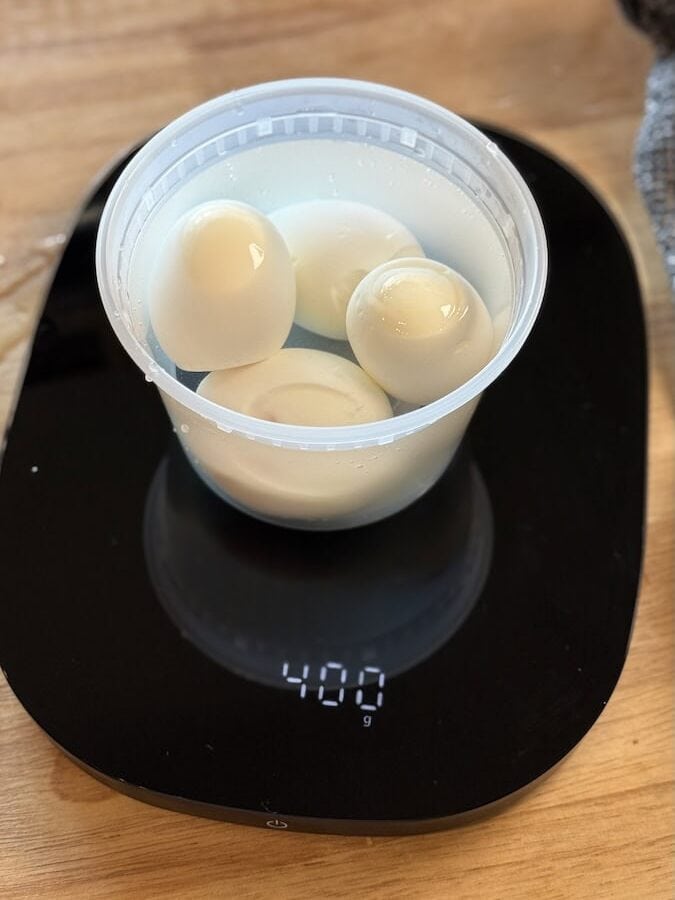
- Calculate Total Weight: Weigh the eggs plus the water to get the total weight.

- Add Soy Sauce: Add 10 percent of the total brine base weight in soy sauce.
- Add Mirin: Add 8 percent of the total brine base weight in mirin.
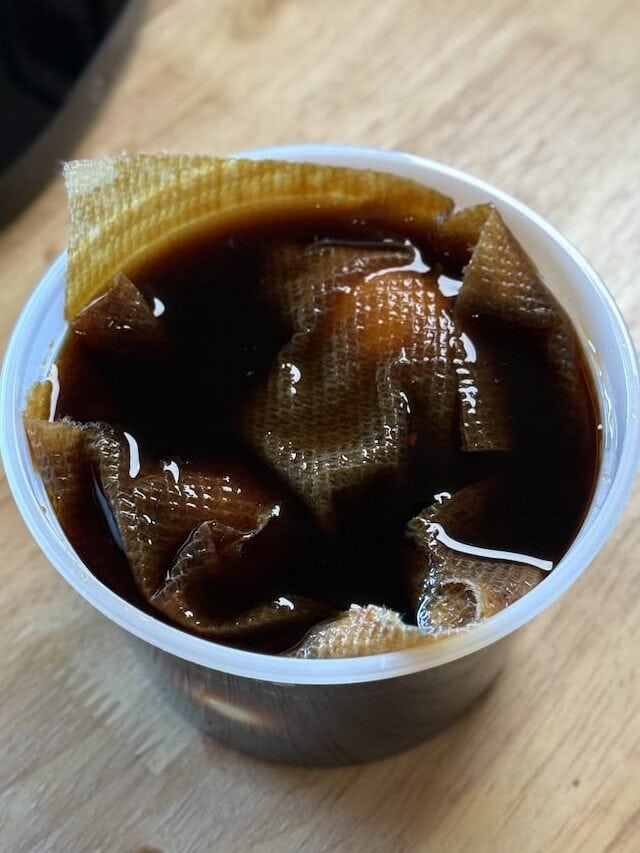
- Marinate: Submerge the peeled eggs in the calculated marinade and add a sheet of paper towel over the top to ensure the eggs stay fully submerged.
- Time: Try to marinate for a minimum of 24 hours for a light color and flavor, or up to 3 days for a darker, richer taste.

How to Serve It
Pull an egg out of the brine, slice it in half lengthwise with a sharp knife, and place both halves cut-side up on top of your finished bowl of ramen. Wipe the knife between cuts so the yolk stays clean. The brine on the cut surface adds a savory hit when you take the first bite.
If you’re hosting, soy-marinated egg is the topping that makes a ramen bar look like a restaurant. Pull a few halves out of the brine and arrange them on a small board next to your green onions and chili threads. My instant ramen bar setup walks through the whole spread.
My Instant Ramen Suggestions
- Ichiran Ramen
- Itsuki Miso Tonkotsu
- Itsuki Osaka Shoyu Tonkotsu
- Nongshim Shin Ramyun
- Maruchan Beef Flavor
Twenty-four hours or three days? Tell me how long you brine.






Literally THE perfect marinated eggs. They tasted perfect with my ramen and I will make eggs with this recipe over and over again! Thank you so much Lisa! 😀
-Klay
Your recipes are way too complex when they should be simple. Like the marinated eggs…. Weighing them and every ingredient? It shouldn’t be so difficult . I will use a recipe that is simple and easy as making those eggs are simple and easy